Best Fabrics for One-Bag Travel Apparel: Merino Wool vs. Synthetics vs. Cotton
Should you pack Merino wool, synthetics, or cotton for one-bag travel? Choose Merino wool for base layers and socks due to natural 3-to-5-day odor resistance. Use lightweight synthetics (polyester/nylon) for quick-drying activewear and outerwear. Eliminate 100% cotton: it retains 25% of its weight in water, takes 12+ hours to dry, and wastes critical 40L backpack volume.
Travel Fabric Performance Matrix: Scenario Analysis
| Travel Scenario | Merino Wool (150-200 gsm) | Performance Synthetics (Polyester/Nylon) | 100% Cotton | Merino-Synthetic Blends |
| --- | --- | --- | --- | --- |
| | | | | |
| | | | | |
| | | | | |
| | | | | |
Evaluating how primary apparel fibers perform across typical travel scenarios helps prevent overpacking and damp luggage issues.
Fabric Breakdown: Benefits, Trade-Offs, and Failure Modes
Understanding how fabrics fail under real travel conditions is key to curating a high-performance carry-on wardrobe.
100% Cotton
- Failure Modes: Absorbs up to 25% of its dry weight in moisture, taking 12 to 24+ hours to air dry in typical ambient conditions. Retains damp odors, creases under compression in packing cubes, and weighs significantly more per square meter than technical alternatives.
- Where it Works: Casual leisure wear at home or short road trips where luggage size and weight are unrestricted.
- Verdict: Eliminate or limit to under 15% of your total travel wardrobe.
Performance Synthetics (Polyester & Nylon)
- Failure Modes: Oleophilic (oil-attracting) fibers trap skin lipids, creating rapid odor build-up ('permastink') after 6 to 12 hours of active wear unless treated with antimicrobial coatings. Can melt or degrade under high-heat drying.
- Benefits: Dries extremely quickly (2 to 4 hours), offers outstanding tensile strength, highly resistant to abrasion, and ultra-lightweight.
- Verdict: Ideal for activewear, outer layers, rain jackets, and pants.
100% Merino Wool (150–200 gsm)
- Failure Modes: Higher price per garment and lower tear/abrasion resistance compared to nylon. Vulnerable to shrinkage or fiber damage if washed in hot water or tumble-dried on high heat.
- Benefits: Natural lanolin coating prevents odor-causing bacterial growth for 3 to 5 days of wear. Excellent thermal regulation across hot and cold climates and rapid wrinkle recovery.
- Verdict: The gold standard for base layer t-shirts, underwear, and travel socks.
Merino-Synthetic Blends (e.g., 80% Wool / 20% Nylon)
- Failure Modes: Slightly slower drying than 100% synthetics and higher cost than pure polyester.
- Benefits: Combines the natural odor resistance and soft feel of wool with the shape retention, elasticity, and durability of nylon.
- Verdict: The ultimate compromise for long-term one-bag travel.
Expert Sink-Washing & Dry-Time Protocols
To maintain a 3-to-7 day wardrobe inside a 40L backpack without relying on laundromats, master the Hotel Room Towel-Roll Method:
Fabric Selection Decision Flowchart for 40L Packing
- Is the garment a next-to-skin base layer, socks, or underwear? → Yes: Choose Merino Wool (150-200 gsm) or a high-Merino blend for 3 to 5 days of odor-free re-wearability.. No: Move to activewear & outerwear check.
- Will you be doing high-exertion workout activities or need sub-4-hour dry times? → Yes: Choose lightweight Performance Synthetics (Polyester/Nylon) with mechanical stretch.. No: Move to climate & structure check.
- Are you packing for variable/cold weather requiring durable thermal protection? → Yes: Select Merino-Synthetic Blends (80/20) for mid-layers or a compact synthetic grid fleece.. No: Avoid 100% cotton; select breathable Tencel/Modal blends or ultra-light synthetics.
Curating Your 40L Wardrobe: Immediate Action Steps
Your decision: Identify high-cotton garments in your current travel wardrobe and replace base layers with Merino wool or performance synthetics.
Do this next: Audit your packing list to ensure base layers are quick-drying and odor-resistant, then compress garments into structured packing cubes to test 40L fit.
Related resource: Explore carry-on dimension rules in '40L Backpack Carry-On vs. Personal Item: Major US Airline Rules Compared' to verify your pack dimensions.Pack your newly optimized merino and synthetic wardrobe into the Lefame 40L Travel Backpack using its included 3 packing cubes for seamless organization.
Take these quick steps to refine your apparel choices before your next trip.
Core Rules of One-Bag Fabric Selection
Decision Support: Best Options by Use Case
For 3-7 day one-bag travel in a 40L carry-on, prioritize Merino wool for next-to-skin layers (socks, underwear, t-shirts) due to unmatched odor control. Choose synthetic polyester/nylon blends for outer layers and activewear for fast drying and durability. Keep cotton below 15% of your total wardrobe weight to prevent bulk, slow drying, and excessive luggage weight.
Best choice for
- 100% Merino Wool or High-Merino Blends (150-200 gsm) — Lanolin naturally resists odor-causing bacteria for 3 to 5 consecutive wears.
- Polyester / Nylon Performance Synthetics — Dries in 2-4 hours after hotel sink washing and withstands high abrasion.
- Merino-Synthetic Knit Blends — Combines elastic memory for wrinkle shedding with enhanced tensile strength under compression.
- Avoid 100% heavy cotton denim or heavy fleece hoodies when restricted to a single 40L carry-on bag.
- Avoid pure cheap polyester base layers on multi-day trips without daily laundering facilities due to rapid oleophilic odor retention ('permastink').
- Tencel / Modal Blends — Great alternative for hot/humid environments offering high drape, silky cool feel, and rapid moisture evaporation.
Essential One-Bag Storage Solutions
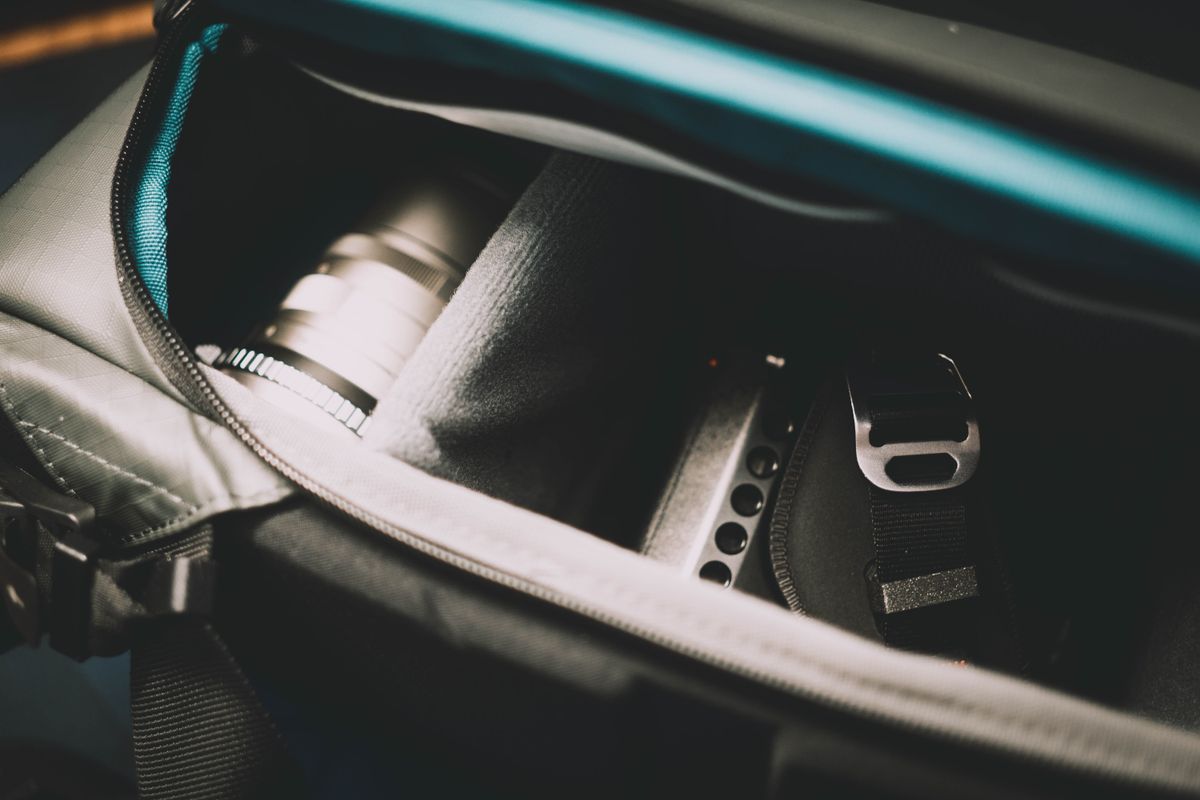
Photo by FOX ^.ᆽ.^= ∫ on Pexels
When traveling with a compact 3 to 7-day capsule wardrobe, bag organization is just as important as fabric choice. The Lefame 40L Travel Backpack is designed specifically to maximize lightweight merino and synthetic apparel efficiency.
- Suitcase-Style 180° Clamshell Opening: Allows flat packing and instant visibility of your compressed apparel cubes.
- Included 3 Packing Cubes: Custom-fitted for clothes, shoes, and toiletries to prevent shifting during transit.
- Dedicated 17-Inch Laptop Pocket: Keeps tech segregated from apparel for fast airport security screening.
- Water-Resistant Exterior: Complements your quick-drying technical clothes by protecting gear from rain and splashes.
Climate & Activity Scenarios: Packing for 3 to 7 Days
Hot & Humid Destinations (e.g., Southeast Asia, Coastal Florida) — Pack ultra-lightweight synthetics (<120 gsm) or Tencel blends for main tops and shorts to maximize airflow and ensure sub-3-hour dry times in high humidity. Use lightweight Merino wool socks for blister prevention.
Cold & Variable Weather (e.g., European Autumn, Pacific Northwest) — Layer a 200 gsm Merino wool base layer beneath a synthetic grid fleece mid-layer and wind-resistant outer shell. This provides high thermal efficiency without occupying excessive volume in your 40L backpack.
3 to 5 Day Business & Urban Travel — Choose Merino-synthetic blend polo shirts and technical stretch trousers. They maintain a crisp, professional appearance directly out of compression cubes without ironing.
Tailor your fabric selection to match your destination's humidity and temperature profiles.
Why do certain fabrics pack down smaller and shed wrinkles faster than others? The answer lies in fiber physics: crimp, moisture regain, and elastic memory.
Fiber Crimp and Wrinkle Shedding
Merino wool fibers feature a natural helical spring-like structure (crimp). When compressed tightly inside packing cubes, wool fibers bend without breaking. Once unpacked, exposure to ambient humidity and natural body heat causes the protein molecules (keratin) to bounce back to their original shape within 15 to 30 minutes.Conversely, cotton fibers are flat, twisted cellulose ribbons. When compressed dry, hydrogen bonds freeze the fibers into folded creases. Without steam or a hot iron to break those bonds, cotton wrinkles remain set for days.
Moisture Regain and Hotel Sink Washing
Moisture regain refers to the percentage of water weight a dry fiber absorbs from humid air. Cotton has a high regain rate (~8.5%) and absorbs liquid water into its core fiber structure, expanding the yarn and locking water inside. This is why heavy cotton hoodies feel soaked and take over 12 hours to line dry.Synthetics like nylon and polyester have extremely low moisture regain (0.4% to 4%). Water sits on the surface of the hydrophobic fiber rather than inside the yarn core. When squeezed out using the towel-roll method, synthetic clothes dry completely in 2 to 4 hours, making daily sink washing realistic on fast-moving trips.
Related Capsule Wardrobe & Packing Guides
Continue optimizing your carry-on setup with these essential guides:
- How to Build a Versatile 5-Day Travel Capsule Wardrobe for One-Bag Travel — Learn exact garment counts and color-matching strategies for minimal luggage.
- 40L Backpack vs. Carry-On Suitcase: Which Fits a 7-Day Capsule Wardrobe Best? — A side-by-side breakdown of hard shell carry-ons versus clamshell travel packs.
- Jet Ready Bag Apparel Curation: How to Pack 7 Days of Clothes in the Lefame 40L — Step-by-step instructions for arranging packing cubes in a 180-degree wide-open backpack compartment.
Frequently Asked Questions
Final Checklist & Next Steps
Your decision: Identify high-cotton garments in your current travel wardrobe and replace base layers with Merino wool or performance synthetics.
Do this next: Audit your packing list to ensure base layers are quick-drying and odor-resistant, then compress garments into structured packing cubes to test 40L fit.
Related resource: Explore carry-on dimension rules in '40L Backpack Carry-On vs. Personal Item: Major US Airline Rules Compared' to verify your pack dimensions.Pack your newly optimized merino and synthetic wardrobe into the Lefame 40L Travel Backpack using its included 3 packing cubes for seamless organization.
Complete this audit before zipping up your carry-on for your next adventure.