Water-Resistant vs. Waterproof Travel Backpacks: Which Exterior Fabric Do You Really Need?
The 95/5 Rule of One-Bag Travel: 95% of airline travelers only need high-density, DWR-coated water-resistant fabric (1,000mm–2,000mm hydrostatic head). This provides 30 to 60 minutes of protection in heavy rain while keeping the backpack under 3.5 lbs. Fully waterproof dry-bags (>10,000mm, welded seams) add 2+ lbs of dead weight, stiff zippers, and zero internal organization.
Key Takeaways: Waterproof vs. Water-Resistant Carry-Ons
- The 1,500mm Benchmark: A Durable Water Repellent (DWR) coating rated at 1,000mm to 2,000mm Hydrostatic Head (HH) handles 99% of urban travel weather without liquid penetrating internal laptop compartments.
- Weight Penalty: Fully waterproof construction with TPU lamination and welded seams increases backpack tare weight by 35% to 50% (adding 1.5 to 2.5 lbs).
- Zipper Dynamics: Standard reverse-coil zippers with storm flaps flex easily for 180-degree clamshell packing, whereas watertight rubberized zippers pull stiffly and degrade quicker with daily use.
- Maintenance Reality: Water resistance relies on surface tension from DWR treatments; re-applying a spray treatment every 6 to 12 months restores factory-level water beading.
Technical Specification Matrix: Fabric Ratings & Construction
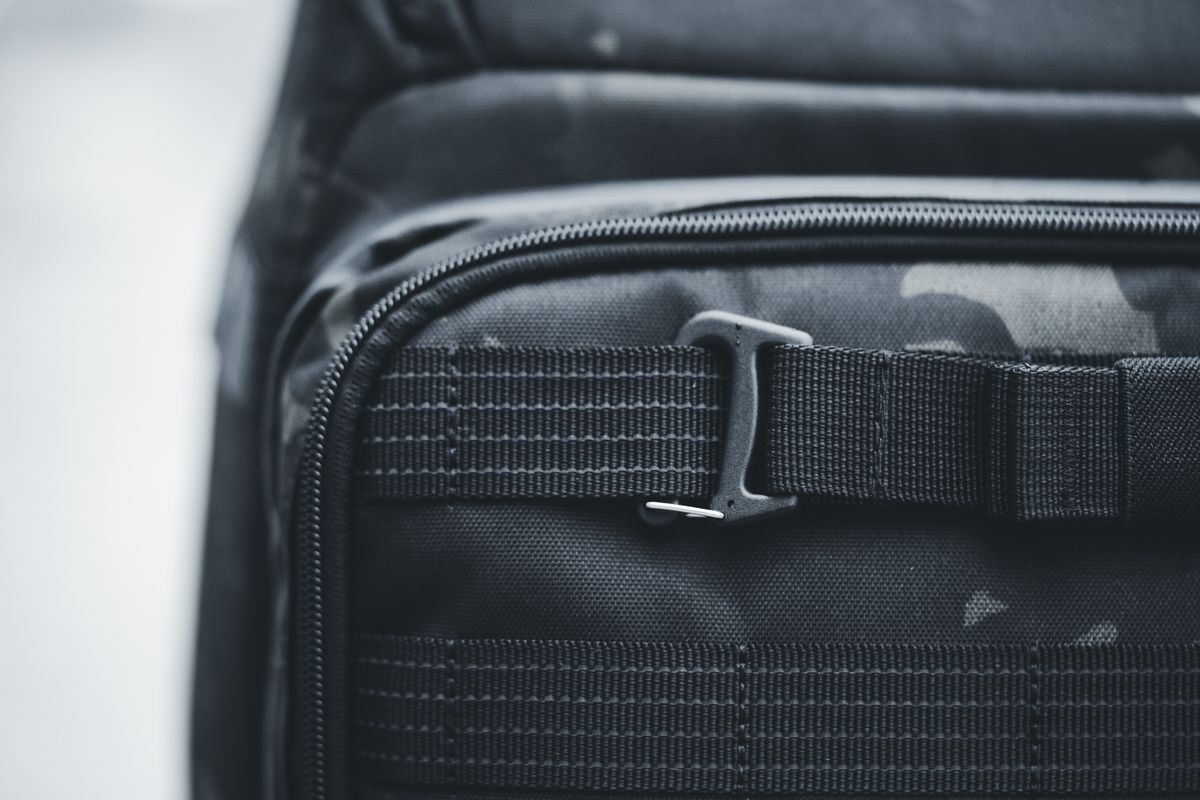
Photo by Erik Mclean on Pexels
| Technical Metric | DWR Water-Resistant Fabric (Standard Carry-On) | TPU Waterproof Membrane (Dry Bag Style) |
| --- | --- | --- |
| Hydrostatic Head (HH) | 1,000mm – 2,000mm | 10,000mm – 30,000mm |
| Average Pack Base Weight | 2.8 lbs – 3.5 lbs (1.27 kg – 1.58 kg) | 4.8 lbs – 6.2 lbs (2.17 kg – 2.81 kg) |
| Seam Construction | Stitched with taped or bound stress points | Radio-frequency (RF) welded or TPU heat-taped |
| Zipper System | Smooth reverse-coil zippers with storm flaps | Airtight pressure-seal rubberized zippers |
| Flexibility & Organization | High (Supports 16+ multi-tier interior pockets) | Low (Rigid fabric structure, open tub design) |
| Breathability (Back Panel) | 3D Air-mesh padded airflow channels | Non-porous rubberized back panel (Sweat prone) |
Comparing physical metrics, weight impacts, and material behavior across standard water-resistant travel packs and specialized waterproof marine gear.
Fabric Architecture: Cross-Section Comparison
Understanding how surface tension and laminated barriers stop liquid intrusion differently.
The One-Bag Traveler Recommendation
For 3 to 7-day trips, avoid the heavy weight and stiff structure of fully waterproof dry bags. Choose a high-capacity 40L water-resistant travel backpack built with durable DWR-treated fabric. You gain 180-degree clamshell opening, dedicated 17-inch laptop padding, and lightweight carry-on efficiency that fits overhead transit standards.
Ready for smart, lightweight travel? Discover the Jet Ready Bag 40L—built with water-resistant exterior fabric, 16 organized pockets, and 3 included packing cubes.
Pros & Cons: DWR Water Resistance vs. Submersible Waterproofing
Pros
- Lightweight design saves up to 2.5 lbs of carry-on allowance.
- Flexible woven fibers allow 180-degree wide clamshell opening.
- Breathable 3D back paneling prevents back sweat during airport walks.
- Accommodates complex multi-pocket organization (16+ pockets).
- DWR surface treatment is easily renewable at home.
- Sustained heavy rain over 90+ minutes will eventually seep through unsealed seams.
- Cannot be fully submerged under water without leaking through zippers.
- Requires periodic DWR maintenance spray after intensive cleaning.
Pro Traveler Tip: Managing Tarmac Delays & Heavy Downpours
> Expert Insight: In textile testing (ISO 811 standard), water resistance is determined by water pressure built up over 1 square centimeter. A standard 1,500mm DWR fabric easily prevents water droplets from penetrating during a 45-minute outdoor walk in moderate rain. However, pressure points—such as tight shoulder straps pressing directly into wet fabric—can force moisture through untreated seams sooner. Always carry a 1-ounce packable rain cover if you anticipate trekking through tropical downpours for hours.
Actionable Next Steps for Gear Selection
Your decision: Opt for a 40L DWR water-resistant clamshell backpack if carry-on convenience, organization, and light weight matter most.
Do this next: Check your current backpack's Hydrostatic Head rating or test DWR bead action using a few water droplets.
- Read next: TSA Checkpoint Speed: How a TSA-Friendly 17-Inch Laptop Backpack Cuts Airport Security Time
Jet Ready Bag (Lefame 40L Travel Backpack) with included 3-piece packing cube set.
Follow these practical steps to choose the right protection for your travel style.
Decision Support: Which Protection Level Matches Your Travel Style?
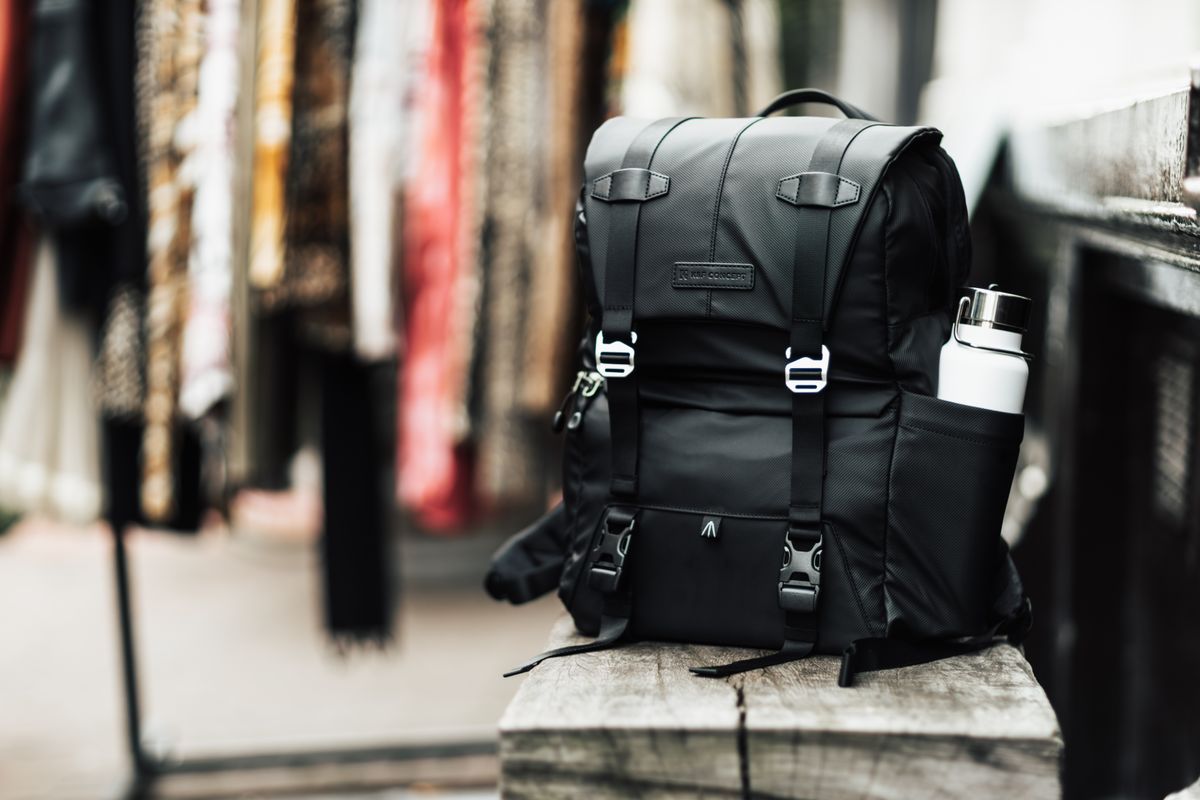
Photo by Matheus Bertelli on Pexels
Rule of thumb: Choose water-resistant DWR fabrics (1,000mm–2,000mm) for 95% of urban and airline carry-on travel. Only select fully waterproof welded-seam dry bags if your travel involves kayak submersion or open boat transfers.
Best choice for
- DWR-Coated Water-Resistant Fabric (1,500mm HH) — Offers 30-60 minutes of rain protection while maintaining light weight (under 3.5 lbs), flexible clamshell opening, and breathable back panels.
- TPU Laminated Waterproof Dry Bag (>10,000mm HH, Welded Seam) — Prevents water ingress during total submersion, though heavier, rigid, and lacking internal organization.
- Avoid fully waterproof roll-top dry bags if you need quick TSA laptop access or carry-on organization.
- Avoid untreated lightweight cotton/canvas fabrics for one-bag travel without an external rain cover.
- Water-Resistant Pack + Packable Rain Cover — Provides emergency 100% rain defense for 2+ hour tropical downpours without adding daily base weight.
Built for One-Bag Travel: Jet Ready Bag 40L
The Jet Ready Bag (Lefame 40L Travel Backpack) delivers optimal water resistance paired with high-capacity travel efficiency:
- 1,500mm DWR Exterior: High-density water-resistant fabric sheds rain, splashes, and spills instantly.
- Suitcase-Style 180° Opening: Wide-open access lets you pack like a suitcase and navigate TSA checkpoints smoothly.
- Dedicated 17-Inch Laptop Sleeve: Rear padded compartment secures large electronics away from weather exposure.
- 16-Pocket Smart Layout: Organizes passports, chargers, toiletries, and apparel into dedicated zip sections.
- Included 3-Piece Packing Cube Set: Maximizes interior space for 3 to 7-day trips without expanding pack dimensions.
1. The Science of DWR Coatings (Durable Water Repellent)
Most high-performance travel backpacks utilize a high-density woven synthetic face fabric—typically 600D to 900D Polyester or Nylon—coated with a hydrophobic Durable Water Repellent (DWR) finish. DWR works at a microscopic level by creating tiny contact angles on the fabric fibers. This high surface tension forces liquid droplets to form round beads that roll off the pack rather than soaking into the weave.2. Hydrostatic Head (HH) Ratings Explained
Hydrostatic Head measured under ISO 811 standards indicates how much water pressure a fabric withstands before liquid penetrates through to the inside:- 800mm – 1,500mm: Standard water-resistant rating. Resists 30 to 60 minutes of moderate rainfall.
- 2,000mm – 5,000mm: Heavy weather resistance. Protects against continuous rainy conditions for multiple hours.
- 10,000mm+: Industrial waterproof rating. Capable of withstanding standing water pressure and direct hose spray.
3. Zippers and Seams: The True Waterproof Bottleneck
Even if a fabric has a 20,000mm waterproof rating, water enters through needle holes in stitched seams and zipper teeth. True waterproof bags eliminate stitching by using Radio-Frequency (RF) welding or heat-applied TPU seam taping, paired with rubberized watertight zippers.However, watertight zippers require high pull force, making frequent access to keys or passports frustrating. Standard reverse-coil zippers equipped with protective fabric storm flaps offer smooth operation and shield internal contents from top-down rainfall without sticky resistance.
Rain Intensity & Exposure Time Decision Matrix
| Scenario & Real-World Context | Rain Exposure & Time | Water-Resistant + DWR Pack (1,500mm HH) | Fully Waterproof Dry Bag (>10,000mm HH) |
| --- | --- | --- | --- |
| Scenario 1: Airport Tarmac Walk | Light Drizzle / 15 minutes | 100% Dry. Liquid beads off outer surface instantly. | 100% Dry. Fabric is impervious to light drizzle. |
| Scenario 2: Urban Transit Walk | Moderate Rain / 45 minutes | 100% Dry inside pockets. Storm flaps shield zippers. | 100% Dry inside main roll-top tub. |
| Scenario 3: Tropical Airport Rain Delay | Heavy Downpour / 90 minutes | DWR prevents face-fabric soaking. Minor dampness near base seams without rain cover. | 100% Dry inside. Welded seams completely seal out heavy rain. |
| Scenario 4: Boat Transfer / Kayaking | Direct Submersion / 5+ minutes | Not designed for immersion. Water enters through zipper teeth. | 100% Dry. Airtight seal holds out submerged water pressure. |
Evaluating fabric performance across 4 distinct real-world weather scenarios.
5 Common Protection Myths & Gear Selection Mistakes
Avoid these critical purchasing and packing traps when selecting travel luggage.
Frequently Asked Questions
Answers to common reader queries regarding water resistance, laptop protection, and DWR care.