Compression Cubes vs Regular Packing Cubes for 40L Backpacks
Should you buy compression packing cubes or standard packing cubes for your 40L carry-on backpack? Standard packing cubes organize clothes efficiently while maintaining a clean rectangular shape that fits flush within airline carry-on depth limits. Compression cubes eliminate 20% to 30% of apparel volume for soft synthetic fabrics, but over-packing them creates a rounded central bulge that forces a 40L backpack past the standard 9-inch airline depth ceiling. For structured garments and strict carry-on compliance, use standard cubes; reserve compression cubes for soft base layers on 5+ day trips.
Scenario-Based Comparison: Compression vs. Standard Cubes
| Travel Scenario & Gear Constraint | Standard Packing Cubes | Compression Packing Cubes | Bag Depth Impact (40L Clamshell) | Recommended Choice |
| --- | --- | --- | --- | --- |
| 5 to 7-Day Trip with Synthetic Base Layers & Fleece | Fills main compartment efficiently; requires precise folding. | Reduces clothing volume by 25–30%, freeing space for footwear or extra layers. | Compression cube can bulge center depth to 9.5 inches if overpacked. | Compression Cubes (packed flat) |
| 3 to 5-Day Business Trip with Collared Shirts & Blazers | Holds garments flat with minimal creasing or collar distortion. | Crushes structured collars and creates severe set-in wrinkles. | Maintains uniform, flat 8.0-inch depth profile. | Standard Packing Cubes |
| Strict 9-Inch Airline Carry-On Sizer Audit | Uniform rectangular shape stays flush within 8.5 inches. | Center depth bulges into an oval 'football' shape up to 10 inches thick. | Passes 9-inch depth test easily. | Standard Cubes or Hybrid Layout |
| 180-Degree Clamshell Backpack Loading (Lefame 40L) | Modular cubes fit flush into internal corners without dead air gaps. | Rigid, over-compressed blocks leave empty corner spaces. | Maximizes rectangular volume and protects 17-inch laptop sleeve. | Tailored Standard Cubes |
Compare how standard and compression packing cubes perform across real-world travel scenarios inside a 40L travel backpack.
Tradeoffs & Failure Modes of Each Packing System

Pros
- Standard cubes maintain consistent rectangular depth under 8.5 inches
- Standard cubes protect dress shirts, linen, and tailored apparel from wrinkles
- Compression cubes reduce soft synthetic clothing volume by up to 30%
- Compression cubes consolidate 7 days of base layers into a compact footprint
- Over-compressed cubes turn into round 'footballs' that force backpack depth beyond 9 inches
- Extreme compression zipper strain can split zipper tracks on budget gear
- Compression cubes crush structured collars, suit jackets, and natural fibers
- Rigid compressed blocks create unused corner dead space inside clamshell bags
The Verdict: Which System Fits Your 40L Packing Style?
For most one-bag travelers using a 40L clamshell backpack like the Lefame 40L, custom-fit standard packing cubes provide the best overall performance. They keep bag depth under 9 inches, protect your 17-inch laptop compartment from interior bulge pressure, and keep clothes wrinkle-free. Choose compression cubes selectively for high-volume, synthetic apparel on trips lasting longer than 5 days.
Ready to master carry-on travel? Explore the Jet Ready Bag (Lefame 40L), engineered with a 180-degree suitcase opening and custom modular packing cubes built for maximum carry-on efficiency.
Expert Packing Tip: Preventing Volumetric Depth Bulging
When packing compression cubes, travelers often zip the compression track while the cube is bulging in the center. This creates a dense oval shape that distorts your backpack's back panel.
Decision Flowchart: Choosing the Right Cube System
- Are you packing wrinkle-sensitive garments (linen, dress shirts, blazers)? → Yes: Use Standard Packing Cubes. No: Check Trip Duration
- Is your trip longer than 5 days with mostly synthetic base layers? → Yes: Use Compression Cubes (Packed Flat). No: Use Standard Packing Cubes
- Is your airline strictly enforcing a 9-inch carry-on depth ceiling? → Yes: Use Tailored Standard Cubes to avoid center bulging. No: Hybrid Approach: 1 Compression for socks/underwear, Standard for tops
Visualizing Depth Displacement in a 40L Clamshell Backpack
This diagram illustrates how standard cubes sit flat within the 9-inch depth envelope of a 40L backpack compared to how over-packed compression cubes bulge at the center.
Immediate Packing Actions for Your Next Flight
Your decision: Determine whether your apparel capsule consists of structured woven fabrics (choose standard cubes) or compressible synthetics (choose compression cubes).
Do this next: Audit your 7-day apparel capsule by fabric type, then test-pack your 40L clamshell backpack and measure total depth across the center zipper line.
- Read next: 180-Degree Flat-Pack Loading Guide
- Read next: How to Pack a 40L Travel Backpack for a 7-Day Trip
Check out the Jet Ready Bag (Lefame 40L), featuring a 180-degree suitcase opening and tailored packing cubes.
Follow these practical steps to prepare your gear for seamless carry-on travel.
Key Takeaways for One-Bag Backpackers
Keep these essential packing principles in mind when organizing your 40L travel backpack.
Decision Support: Matching Cubes to Apparel & Gear

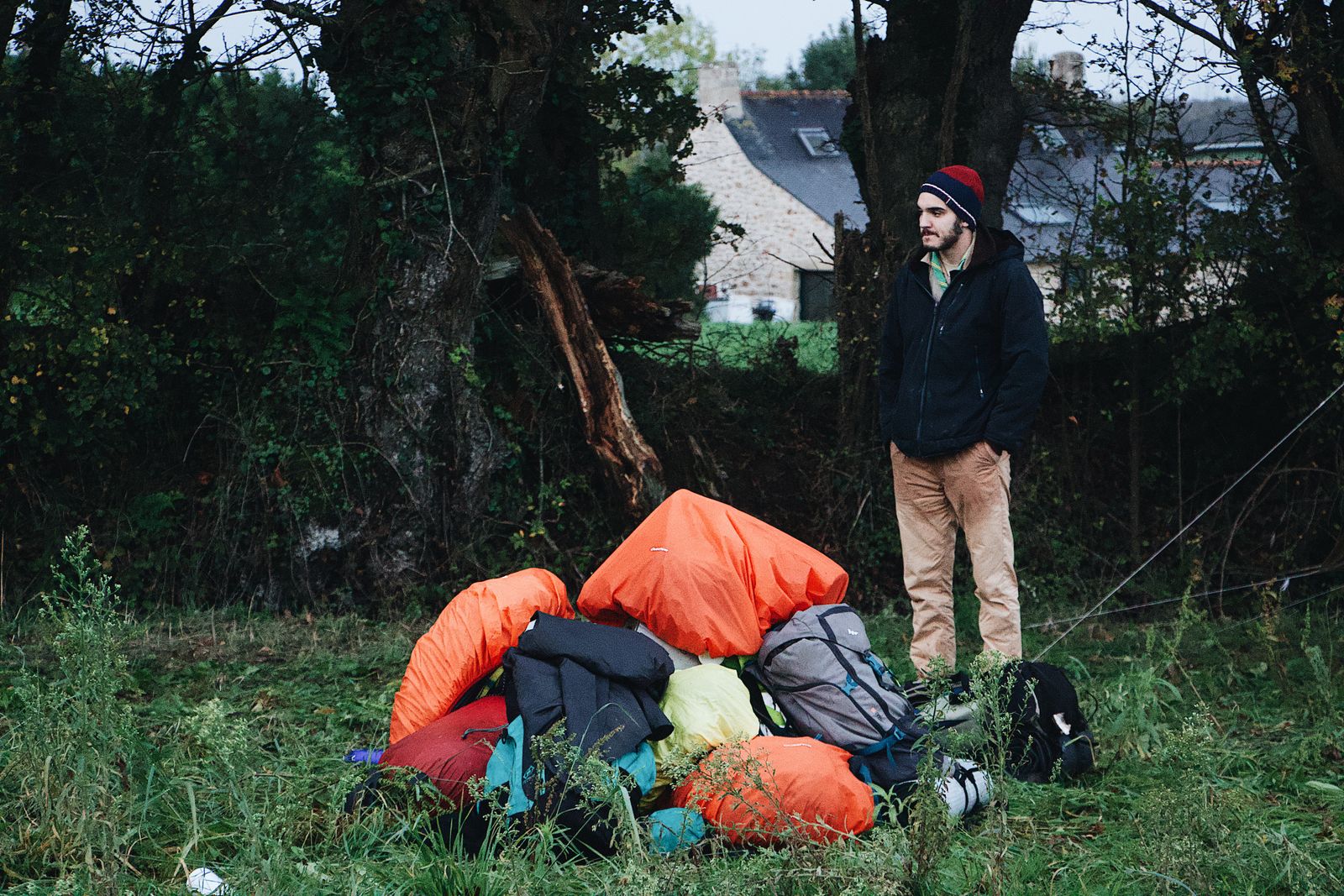
Photo by David Brown on Pexels
Standard packing cubes maintain clean rectangle shapes and consistent depth, making them ideal for structured garments and 3–5 day trips. Compression cubes eliminate up to 30% of dead air volume for soft synthetics on 7-day trips, but can create a center bulge that forces a 40L backpack beyond the 9-inch airline depth ceiling.
Best choice for
- Compression Packing Cubes — Squeezes out air volume from bulky synthetic fleeces, t-shirts, and socks, fitting 7 days of apparel into a 40L footprint.
- Standard Packing Cubes — Keeps button-down shirts, trousers, and blazers flat without creasing or crushing structured collars.
- Modular Tailored Cubes — Fills rectangular compartment corners perfectly without creating central depth bulging that pushes against laptop sleeves.
- Avoid packing compression cubes to maximum density if your 40L backpack depth is tightly capped at 9 inches for overhead bin compliance.
- Avoid compression cubes for structured jackets, starched collared shirts, or natural linen items.
- Hybrid Cube System — Combine one compression cube for base layers/underwear with two standard cubes for tops and outerwear to optimize volume without bulging.
Recommended Gear for One-Bag Travel
The right travel backpack is engineered specifically to accommodate modular packing systems.
Real-World Travel Scenarios: 3-Day Business vs. 7-Day Vacation
3-Day Business Trip (Work Laptop + Dress Apparel) — Use standard packing cubes. Fold collared shirts and trousers flat. The standard cube layout keeps the backpack depth at a sleek 8 inches, protecting your 17-inch laptop in the dedicated rear compartment from interior pressure.
7-Day Personal Vacation (Merino Wool + Synthetic Activewear) — Use compression cubes for base layers and socks, compressed flat. Place the compressed cube at the base of the clamshell opening to keep the center of gravity close to your back while keeping depth within 9 inches.
Winter Weekend Getaway (Bulky Sweaters & Outerwear) — Use one large compression cube for thick knits. Squeeze out excess air manually before zipping the perimeter track, and pair with a slim standard cube for delicate layers.
Here is how each packing setup performs in distinct travel environments.
The Physics of Compression: X-Y Reduction vs. Z-Axis Expansion
When travelers hear that compression cubes save up to 30% volume, they assume their backpack will instantly become smaller in every dimension. However, volumetric compression works by forcing trapped air out of fabric matrixes. As the secondary compression zipper draws the top and bottom panels together, the compressed apparel pushes outward against the side walls.
In geometric terms, while surface area (X and Y dimensions) shrinks, depth (the Z-axis) expands outward at the center point. Instead of a flat rectangular block, an over-stuffed compression cube forms a dense, oval shape—much like a football.
Why Depth Matters for 40L Carry-On Compliance
Major US airlines enforce strict carry-on size limits, typically 22 x 14 x 9 inches. A standard 40L travel backpack, such as the Lefame 40L, is engineered to max out these dimensions precisely (e.g., 21.5 x 14 x 8.5 inches).
When you pack two over-compressed cubes stacked on top of each other inside a clamshell main compartment, the central Z-axis expansion bows the front face and back panel outward. This increases total bag depth from 8.5 inches to 10.5 or 11 inches.
This depth distortion leads to two critical failure modes:
Matching Cube Architecture to 180-Degree Clamshell Backpacks
Backpacks designed like suitcases—featuring 180-degree lay-flat openings—rely on rectangular modularity. Standard packing cubes sit flush against the internal walls, utilizing corner volume efficiently without bowing the exterior fabric. By understanding how fabric types react under compression, savvy travelers can mix standard and compression cubes to achieve optimal density while remaining strictly carry-on compliant.
Related Guides & Packing Strategies
- Packing Cubes for Clamshell Backpacks: 40L Layout & Selection Guide
- How to Use Packing Cubes in a 40L Backpack: Guide & Spatial Map
- Lefame 40L Capsule Wardrobe Packing Guide: Pack 7 Days of Clothes
Frequently Asked Questions
Get quick answers to common questions about packing cubes and carry-on compliance.
Your One-Bag Packing Action Plan
Your decision: Choose standard packing cubes if maintaining exact flat dimensions and wrinkle-free dress clothes is your priority; choose compression cubes if you need maximum clothing density for 5+ day trips using synthetic fabrics.
Do this next: Audit your 7-day apparel capsule by fabric type, then select the packing cube layout that fits the 180-degree opening of your 40L clamshell bag without exceeding 9 inches in depth.
- Read next: 180-Degree Flat-Pack Loading: How to Organize Your Backpack's Modular Pockets
- Read next: How to Pack a 40L Travel Backpack for a 7-Day Trip Using Compression Cubes
Explore the Jet Ready Bag (Lefame 40L), engineered with a 180-degree clamshell design and included tailored packing cubes for seamless carry-on compliance.
Take these final actions to optimize your carry-on setup.
Cover photo by Maël BALLAND on Pexels.