40L Carry-On Backpack vs. Rolling Suitcase for 3 to 7-Day Trips
Should you carry a 40L travel backpack or roll a traditional carry-on suitcase for a 3 to 7-day trip? Choose a 40L clamshell travel backpack if your itinerary includes stairs, cobblestones, public transit, or tight flights requiring hands-free speed. Opt for a rolling suitcase strictly if you travel exclusively between paved airports and hotels on flat surfaces and cannot comfortably carry 15 to 20 pounds on your back.
40L Backpack vs. Rolling Suitcase Trade-Off Matrix
| Travel Scenario / Metric | 40L Carry-On Backpack (e.g., Lefame 40L) | Rolling Suitcase (22x14x9 Roller) |
| --- | --- | --- |
| Historic Streets & Cobblestones | Glides over rough ground with zero friction on shoulders; no mechanical failure risk | Wheels jam, vibrate heavily, and risk snapping axle pins on uneven stones |
| Public Transit & Walk-Up Apartments | Hands-free mobility across stairs, subways, and crowded transit platforms | Requires awkward two-handed lifting up staircases and through narrow doors |
| TSA Security Checkpoints | Fast layout with dedicated rear laptop pocket; no dirty floor contact needed | Must be placed on floor or bench to fully unzip main compartment for tech |
| Regional Jet Overhead Bins | Soft-sided exterior compresses easily into tight regional jet overhead bins | Rigid hardshell frame forces premature gate-checking on smaller aircraft |
| 3-7 Day Packing Volume Efficiency | 100% usable internal volume; no wheel housing or handle rails taking up space | Loses 10-15% internal volume to recessed wheel wells and trolley tracks |
This scenario-based matrix evaluates how a 180-degree clamshell 40L travel backpack compares against a traditional carry-on rolling suitcase across real-world travel conditions.
Failure Modes & Structural Trade-Offs
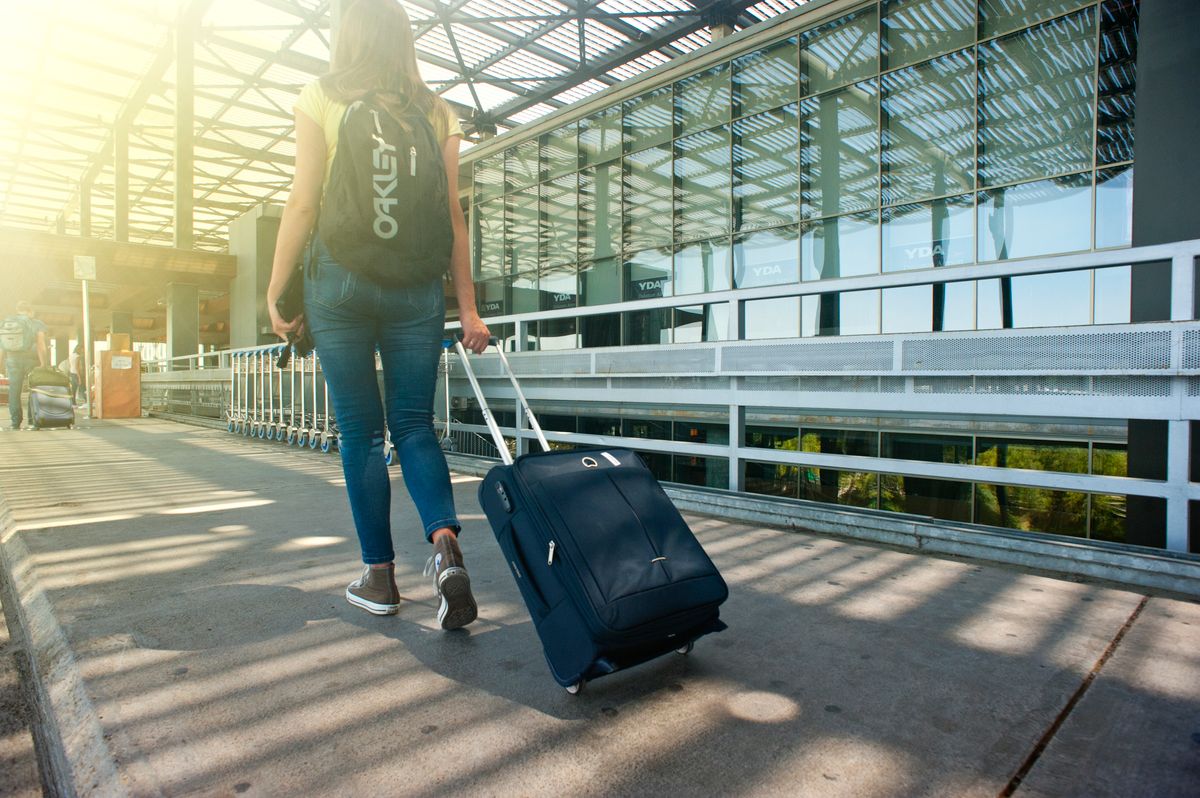
Photo by Atlantic Ambience on Pexels
Pros
- 40L Backpack: Complete hands-free freedom across stairs, dirt roads, and transit systems
- 40L Backpack: 100% usable volume without wasted space from wheel wells or trolley tracks
- 40L Backpack: Fits more easily into cramped overhead bins on regional jets
- Rolling Suitcase: Zero shoulder strain on long, smooth airport terminal concourses
- Rolling Suitcase Failure Mode: Broken wheels or snapped trolley handles render the bag useless mid-trip
- Rolling Suitcase Failure Mode: Hardshell frames cannot compress, forcing gate-checking on small planes
- 40L Backpack Failure Mode: Overpacking heavy gear without chest/hip support causes neck and shoulder fatigue
- 40L Backpack Failure Mode: Unstructured soft bags can bulge if packed without organized cubes
The Verdict: When the 180° Clamshell 40L Backpack Wins
For 90% of active 3 to 7-day travelers, a 180-degree clamshell 40L backpack is the superior carry-on choice. It combines the structured, lay-flat packing style of a suitcase with the uncompromised mobility of a carry-on pack.
Ready to upgrade your travel carry-on? Explore the Lefame 40L Travel Backpack at Jet Ready Bag — featuring a 180° wide-open clamshell design, dedicated 17" laptop compartment, and 3 included packing cubes.
How to Choose and Transition to One-Bag Travel
Your decision: If your trip involves stairs, trains, cobblestones, or multiple stops, select a 40L clamshell backpack. If strictly smooth airport-to-taxi transfers, stick with rolling luggage.
Do this next: Opt for a 180-degree clamshell 40L travel backpack packed with structured packing cubes for maximum accessibility.
- Read next: 5-Day Travel Capsule Wardrobe Guide
- Read next: How to Use Packing Cubes in a 40L Backpack
Lefame 40L Travel Backpack (Includes 3 Packing Cubes)
Transitioning from rolling luggage to one-bag carry-on travel requires aligning your bag format with your itinerary demands.
Key Comparison Highlights
Essential takeaways when evaluating a 40L backpack versus a rolling suitcase for 3 to 7-day travel:
Luggage Format Selector: Best For & When to Avoid
For 3-to-7-day trips involving varied terrain, stairs, public transit, or tight flights, a 40L carry-on backpack provides unrivaled speed and hands-free freedom. A rolling suitcase is better strictly for smooth, flat indoor environments where carrying weight on the back is undesirable.
Best choice for
- 40L Carry-On Backpack — Eliminates dragged wheels, offers hands-free navigation, and bypasses uneven sidewalk friction.
- Rolling Suitcase — Keeps weight off shoulders on smooth airport tile and hotel concourses.
- Avoid a rolling suitcase if your trip involves historic European cobblestones, walk-up apartments without elevators, or fast subway transfers.
- Avoid a 40L backpack if you have severe spine or shoulder injuries that restrict carrying 15–22 lbs.
- Hybrids (Wheeled Backpacks) — Adds significant frame weight and reduces internal packing volume; rarely optimal for strict carry-on limits.
Built for One-Bag Efficiency: Lefame 40L Travel Backpack
Photo by Dan Galvani Sommavilla on Pexels
Designed specifically for minimalist travelers, business commuters, and 3 to 7-day weekend getaways.
Real-World Travel Scenarios: Cobblestones, Airport Transit, & Overhead Bins
Navigating Historic European Cobblestones & Walk-Up Apartments — Choose the 40L Backpack. Rolling suitcase wheels rattle loudly, catch on gaps, and risk snapping axle pins. A backpack keeps gear elevated and stable.
Navigating Busy Airport TSA Checkpoints — Choose the 40L Backpack with rear tech access. Quick-zip 17-inch laptop compartments allow you to remove your device without opening your clothing section.
Boarding Tight Regional Jets & Overhead Bin Competition — Choose the 40L Backpack. Soft-sided 40L packs compress into smaller overhead bins, whereas rigid hardshell rolling bags get force-checked at the gate.
Walking 2+ Miles on Flat Terminal Concourses — Choose the Rolling Suitcase if carrying 18 lbs on your shoulders causes fatigue. Otherwise, a well-padded 40L backpack with breathable mesh back panel balances load easily.
Here is how both luggage formats perform under real travel pressures:
When choosing luggage for 3 to 7-day travel, three core parameters determine performance: internal packing volume efficiency, physical ergonomics, and checkpoint clearance speed.
1. Usable Internal Packing Volume
While both a standard 22x14x9-inch rolling suitcase and a 40L travel backpack share similar exterior footprints, their internal volume utilization is markedly different. A rolling suitcase requires internal metal channels to accommodate the telescoping trolley handle, plus recessed corners for wheel housings. These components reduce net packing capacity by 10% to 15%.In contrast, a soft-sided rectangular backpack like the Lefame 40L provides unencumbered interior space. When paired with a 180-degree clamshell opening and dedicated packing cubes, every cubic inch is available for wardrobe capsules, footwear, and travel accessories.
2. Ergonomics & Weight Distribution
The primary failure point of inferior travel packs is improper weight placement that pulls backward on the shoulders. Modern 40L travel backpacks eliminate this through S-curve padded shoulder straps, sternum stabilization, and breathable mesh back panels. Carrying 15 to 20 pounds centered on your back engages larger muscle groups in your legs and core, freeing both hands to hold coffee, tickets, or phone navigation.3. TSA Checkpoint Efficiency
Traditional suitcases require laying the entire bag flat on a bench or dirty terminal floor to open the main zip for laptop removal. A specialized travel backpack incorporates a dedicated rear padded compartment fitting up to 17-inch laptops and tablets. You can slide your devices out in seconds without disturbing your packed clothes.Further Reading on Minimalist Travel
Explore essential strategies for mastering carry-on travel and efficient packing:
- How to Build a 5-Day Travel Capsule Wardrobe in a 40L Backpack
- How to Pack a 40L Clamshell Backpack for 7-Day Trips
- Major US Airline Carry-On Size Guide for 40L Backpacks
Frequently Asked Questions
Answers to common reader questions regarding 40L carry-on travel backpacks.
Cover photo by ROMAN ODINTSOV on Pexels.