
One-Bag Airport Security & Personal Item FAQ: Navigate TSA with Ease
Picture standing at a crowded TSA checkpoint with a long line behind you. To clear airport security in under 60 seconds with a single 40L backpack, place your 3-1-1 liquids bag in a top quick-access pocket and your laptop in a dedicated rear compartment. While a 40L bag meets standard US overhead carry-on dimensions (22 x 14 x 9 inches), fitting it under an airline seat as a personal item requires moderate soft-sided compression.
Carry-On Strategy: Overhead Bin vs. Under-Seat Personal Item Placement
Evaluate your packing volume against your airline's specific overhead carry-on and under-seat personal item thresholds before heading to the terminal.
Best choice for
- Fully packed 40L in the overhead bin — Provides 3 to 7 days of packing capacity while perfectly matching standard 22 x 14 x 9 inch overhead limits.
- Compressed 40L under the seat — By under-packing to approximately 70% capacity (25-28L volume), the soft bag compresses down to fit 18 x 14 x 8 inch personal item sizers.
- Soft-sided 40L overhead placement — Unlike rigid rolling suitcases that are forcibly gate-checked with valet tags, a flexible 40L backpack can squeeze into narrow regional overhead bins.
- Overpacking your 40L bag to maximum depth (10+ inches) while expecting it to pass uninspected as a free personal item at low-cost carrier boarding gates.
- Two-bag setup (30L backpack + small personal pouch) — If you must carry heavy camera gear or multiple laptops that prevent your main pack from compressing under the seat.
Pro Tip: The Clamshell Security Screening Layout Method
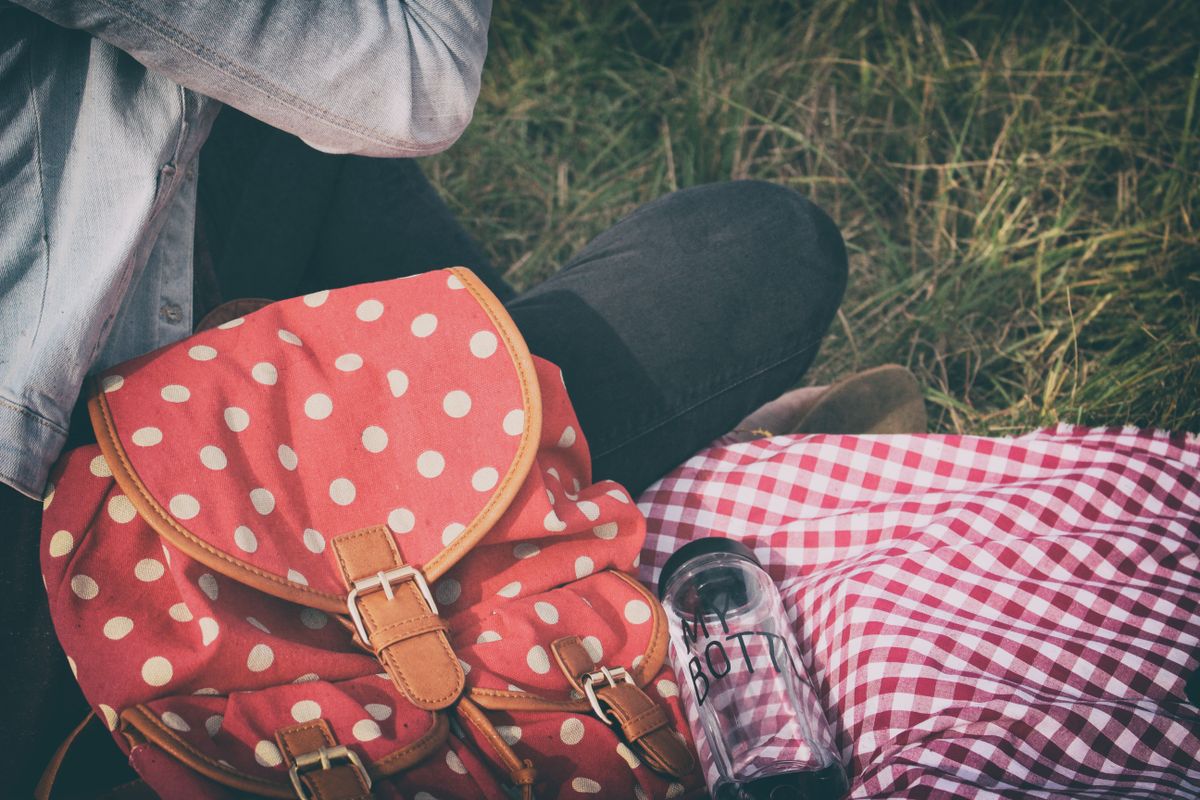
Photo by Tofros.com on Pexels
Experienced one-bag travelers never open their main clothing compartment at airport security. By staging high-scrutiny items in dedicated perimeter pockets, you eliminate bin chaos and protect your privacy on the conveyor belt.
Staging Your Gear for 10-Second Retrieval
US Airline Carry-On vs. Personal Item Dimension Matrix
| Airline Carrier | Published Carry-On Limit | Published Personal Item Limit | 40L Backpack Fit Status |
| --- | --- | --- | --- |
| Delta Air Lines | 22 x 14 x 9 in (56 x 35 x 23 cm) | 18 x 14 x 8 in (approximate) | Fits Overhead Carry-On; Fits Personal Item if under-packed to 70% |
| American Airlines | 22 x 14 x 9 in (56 x 35 x 23 cm) | 18 x 14 x 8 in (45 x 35 x 20 cm) | Fits Overhead Carry-On; Fits Personal Item with compression |
| United Airlines | 22 x 14 x 9 in (56 x 35 x 23 cm) | 17 x 10 x 9 in (43 x 25 x 22 cm) | Fits Overhead Carry-On; Basic Economy requires overhead payment or tight squeeze |
| Southwest Airlines | 24 x 16 x 10 in (61 x 40 x 25 cm) | 18.5 x 13.5 x 8.5 in (47 x 34 x 21 cm) | Guaranteed Overhead Carry-On; Excellent fit across all aircraft |
| JetBlue Airways | 22 x 14 x 9 in (56 x 35 x 23 cm) | 17 x 13 x 8 in (43 x 33 x 20 cm) | Fits Overhead Carry-On; Personal item requires moderate soft compression |
| Spirit / Frontier | 22 x 18 x 10 in (56 x 46 x 25 cm) | 18 x 14 x 8 in (45 x 35 x 20 cm) | Fits Paid Carry-On; Under-seat personal item requires compression straps engaged |
Compare major US airline size rules against the dimensions of a standard 40L travel backpack. While overhead carry-on limits are nearly uniform across full-service airlines, under-seat personal item sizers vary significantly.
Recommended Gear for Airport Efficiency
To execute seamless security passes and organized one-bag travel, your backpack must feature quick-access pocket architecture and a lay-flat opening.
Key Airport Security Takeaways for One-Bag Travelers
- A fully packed 40L backpack complies with overhead carry-on dimensions across all major US airlines.
- Under-seat personal item compliance requires compressing soft sides and under-packing to roughly 70% capacity.
- Stage 3-1-1 liquids in top exterior pockets so you never have to open your main clothing compartment at TSA.
- Dedicated rear laptop sleeves allowing 180-degree lay-flat opening dramatically speed up screening in standard TSA lanes.
- TSA PreCheck travelers can leave liquids and tech inside the backpack, but quick-access design remains vital for international flights and standard lanes.
- Soft-sided backpacks flex into narrow regional jet overhead bins where hard suitcases get gate-checked.
The Pre-Security One-Bag Packing Checklist
- Stage 3-1-1 liquids clear bag in top quick-access zippered pocket.
- Ensure 17-inch laptop is unencumbered in dedicated rear sleeve for fast pull-out.
- Empty pockets of keys, phone, and coins into hidden back zippered pocket before stepping into queue.
- Tuck loose shoulder and sternum strap ends to prevent snagging on conveyor belt rollers.
- Verify water bottle pocket is completely empty of liquids over 3.4 oz / 100ml.
- Keep boarding pass and ID accessible in hidden passport pocket until identity verification is complete.
Common TSA Screening Pitfalls to Avoid
Photo by Zeal Creative Studios on Pexels
Avoid these frequent packing errors that lead to manual bag searches, delayed boarding, or damaged gear at airport checkpoints.
Frequently Asked Questions: One-Bag Airport Security & Sizing
Find detailed answers to the most common traveler questions regarding TSA checkpoint procedures, laptop screening, and airline luggage dimensions.
Related One-Bag Travel Resources
- Does the JetReady Bag fit a laptop as a personal item?
- Can the Jet Ready Bag serve as an airline personal item?
- Speed Through Airport Security with the TSA-Friendly Jet Ready Bag
Your Pre-Flight Airport Transit Action Plan
Your decision: Determine if your upcoming trip requires fitting your 40L backpack under the seat or if you will be using the overhead bin.
Do this next: Pack your 3-1-1 liquids pouch in the dedicated top pocket and slide your 17-inch laptop into the padded rear compartment before leaving for the airport.
- Read next: How to Pack a 40L Bag to Guarantee No Forced Gate-Checks at the Airport
- Read next: How to Breeze Through TSA Security with One-Bag Carry-On Packing
Explore the Jet Ready Bag (Lefame 40L) featuring a 180-degree clamshell design, dedicated 17-inch laptop sleeve, and included 3-piece packing cube set.
Take these concrete steps before your next trip to ensure your 40L backpack glides through security and meets all airline overhead or personal item requirements.
Cover photo by Tofros.com on Pexels.